Quảng Trị promotes the conservation and sustainable development of its World Biosphere Reserve
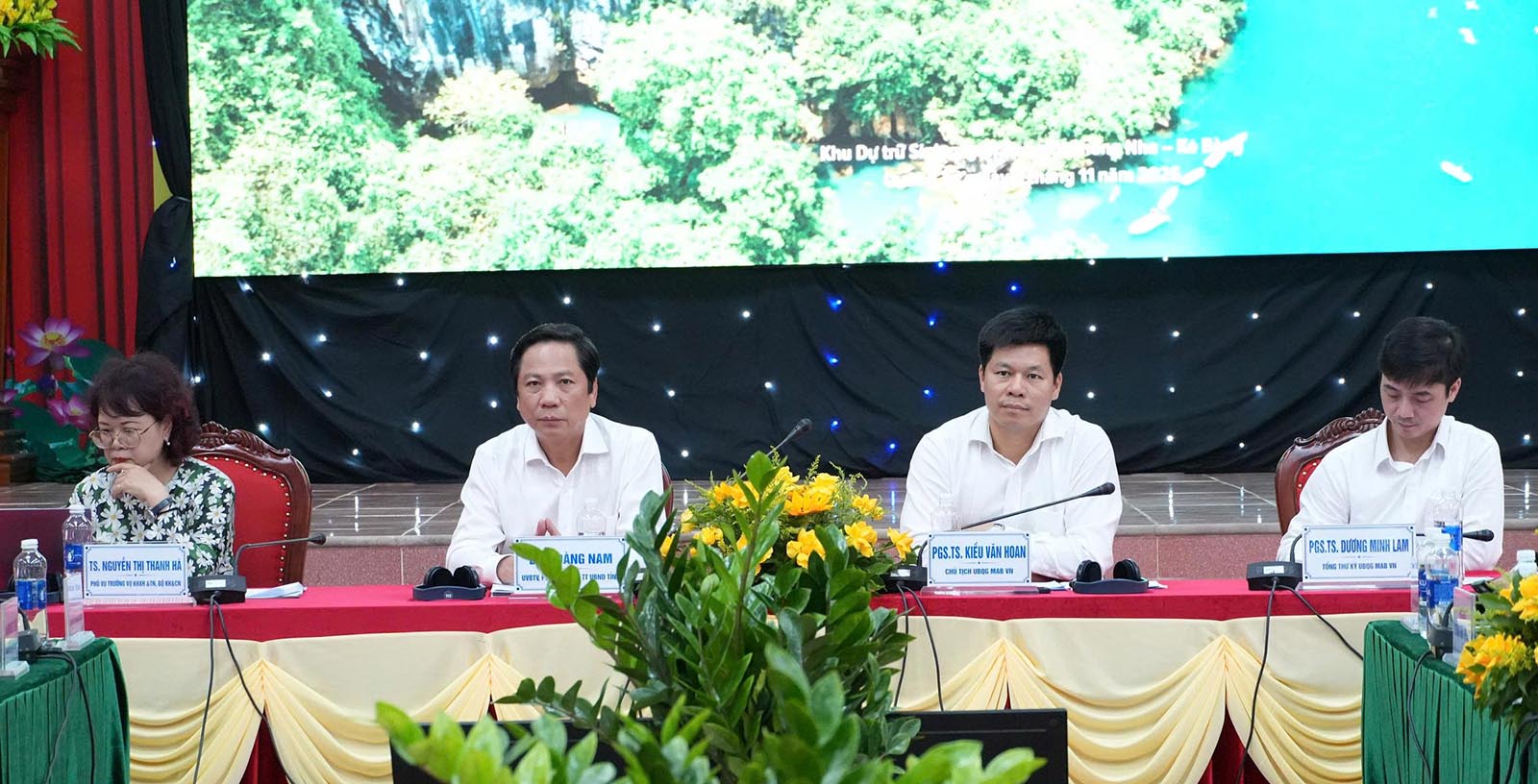
Speaking at the conference, Permanent Vice Chairman of the Provincial People’s Committee Hoang Nam emphasized that World Biosphere Reserves serve not only as spaces for nature conservation but also as hubs that bridge scientific knowledge with indigenous wisdom, aligning local efforts with the goals of sustainable development. The recognition of Phong Nha - Ke Bang by UNESCO as Vietnam’s 12th World Biosphere Reserve further affirms the site’s outstanding values in terms of landscapes, ecosystems, and biodiversity.
He affirmed that this recognition by UNESCO is both an honor and a responsibility to preserve natural values for future generations. The province has determined that conservation efforts must be integrated with sustainable socio-economic development, and that tourism activities must respect the limits and carrying capacity of the natural environment. Crucially, local residents must be the primary participants in conservation and should also benefit from the outcomes of this process.
At the conference, delegates focused on exchanging experiences in the management and conservation of biodiversity, while proposing the increased application of science, technology, innovation, and digital transformation in the monitoring of natural resources. Furthermore, emphasis was placed on developing eco-tourism, creating unique tourism products, expanding international cooperation, and establishing stable livelihoods for local communities in connection with conservation efforts.
Articles in the same category
- Quang Tri Provincial People's Committee holds a meeting to review preparations for the Investment Promotion Conference in Ho Chi Minh City (05/11/2026)
- Provincial leaders meet with Alphanam Group regarding investment proposals in Quang Tri (05/11/2026)
- Permanent Vice Chairman of the Provincial People's Committee Hoang Nam chairs a meeting on the implementation status and disbursement of public investment capital for key transport projects (05/11/2026)